Introduction to Technoculture

ATCM 2300 · University of Texas at Dallas · 2017 to 2019 · a lecture of 300+ students a semester, with discussion sections

A foundational lecture course designed to understand history in relation to practice and practice in relation to history, with evocative objects as the mediating influence.

The lecture was taught by Anne Balsamo.

The course

As Lead TA and Producer (2017 to 2018), then Graduate Teaching Associate and Lead Curriculum Coordinator (2018 to 2019), I helped design and revise the weekly lectures, produced discussion-section materials, developed assessment strategies, and curated audio-visual content for the lectures. I coordinated logistics and assessment for the lecture, and supervised, mentored, and scheduled rotating cohorts of graduate teaching assistants across the discussion sections.

The textbook, Introduction to Technoculture (Kendall Hunt, 2020), I co-wrote with Anne Balsamo, partly to help onboard future cohorts of TAs who might not have our background.
↑ Back to top

My discussion sections

I led two discussion sections of 15 students each: I ran discussion, and designed, assigned and assessed the weekly creative technoculture projects, the midterm and the final.

Students watched the first four parts of John Berger’s Ways of Seeing in the first four weeks. The first assignment, “Viewpoint,” had them take the same picture with a disposable film camera and with a digital camera, then write about the differences and about the cultural practice of looking. Another had them study period magazine advertisements and make their own; some groups carried theirs into the final project.

For the last week of spring 2019, I put together a showcase of student work gathered from every discussion section, for the full lecture.

↑ Back to top

Student work

From my discussion section. Student names are withheld.

An Emerging Technology and Its Ancestor

Introduction to Technoculture (ATCM 2300), my discussion section · UT Dallas · Spring 2019

The final project I wrote for my section began with a line from Dewey: give students “something to do, not something to learn.” Groups chose an emerging technology and an antecedent, researched both, and made an original creative work from the linkages they found, followed by individual process papers on how the group worked.

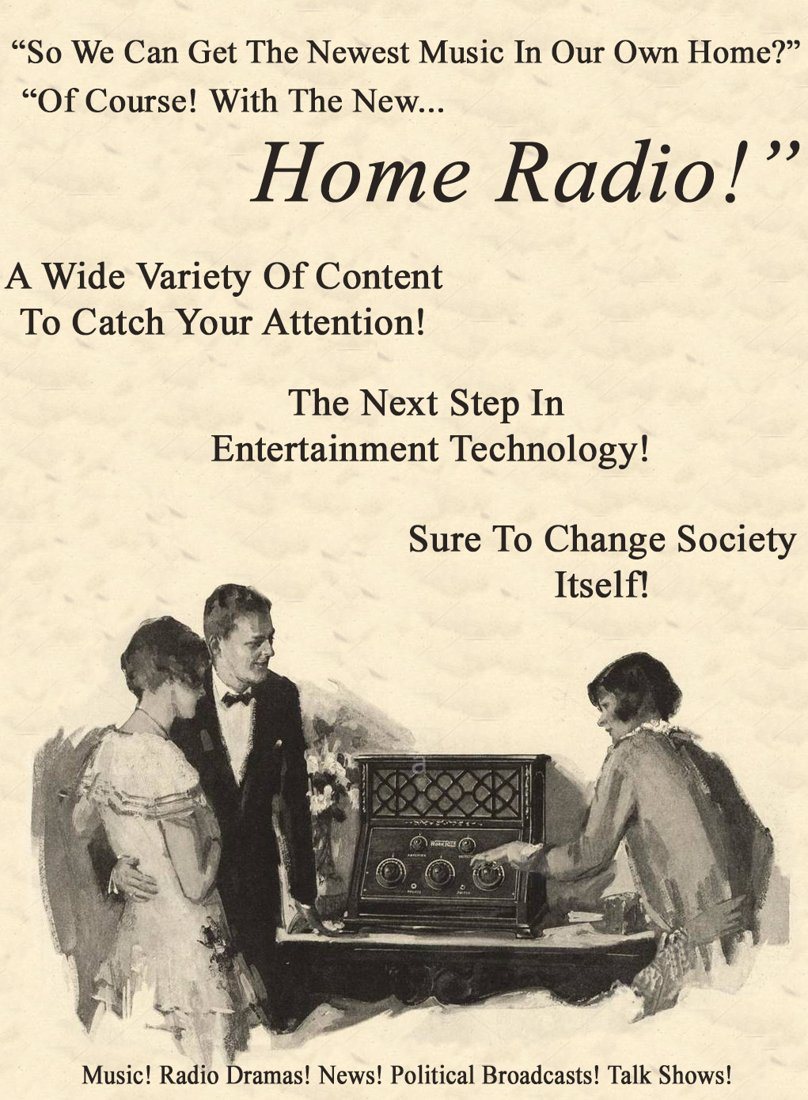
Student-made advertisement for the home radio in period style
Home radio
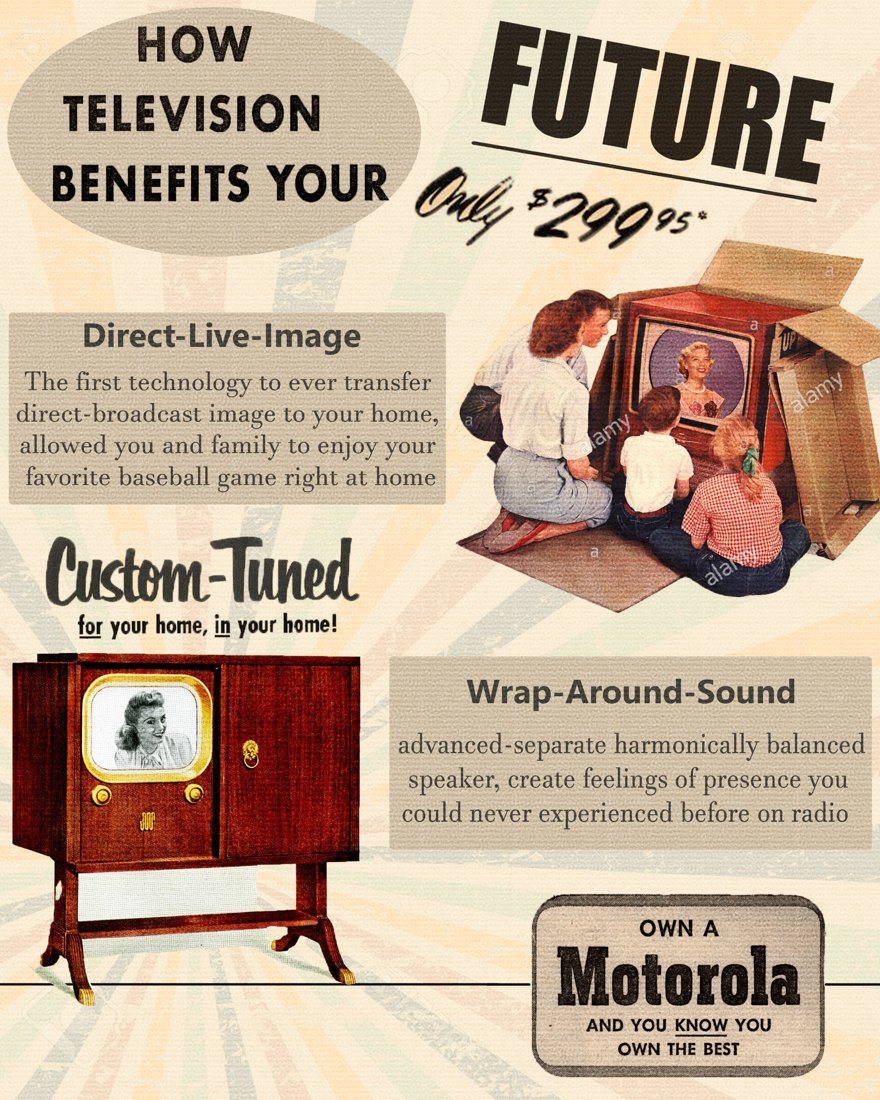
Student-made advertisement for television in mid-century style
Television
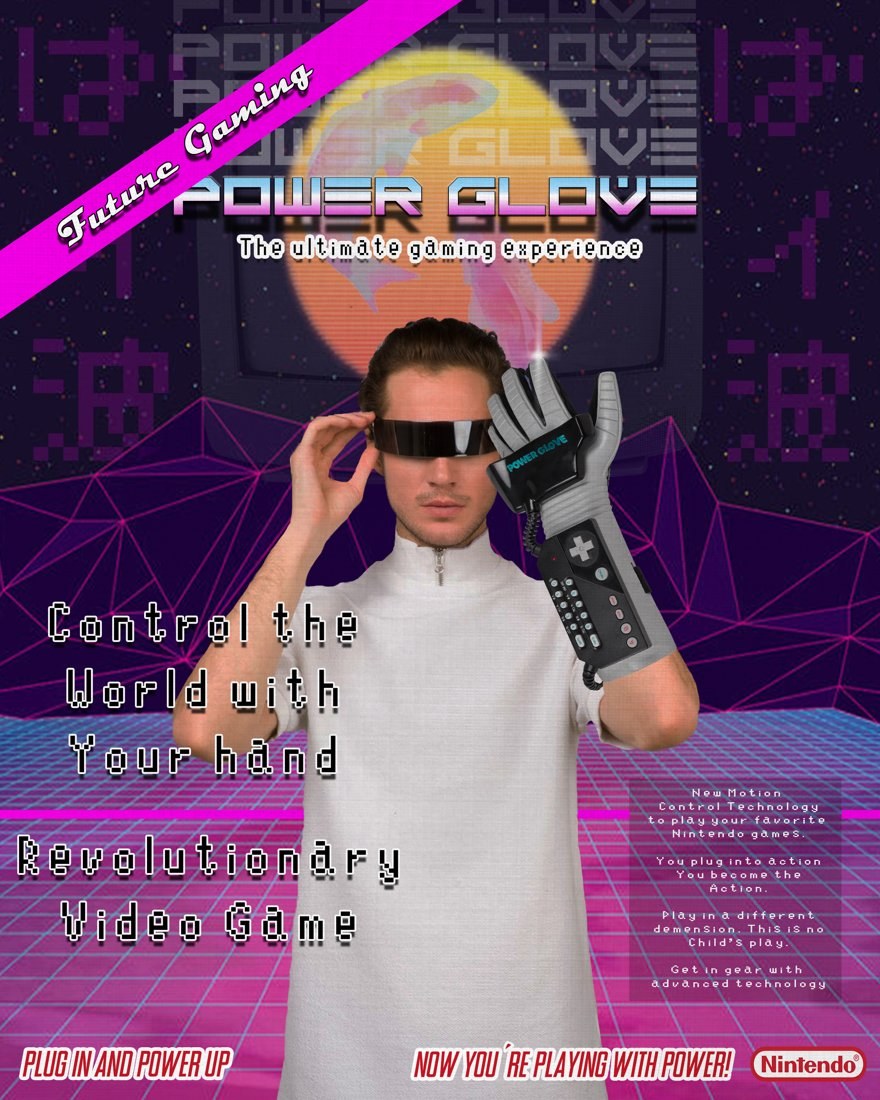
Student-made advertisement for the Power Glove on a neon grid
Power Glove
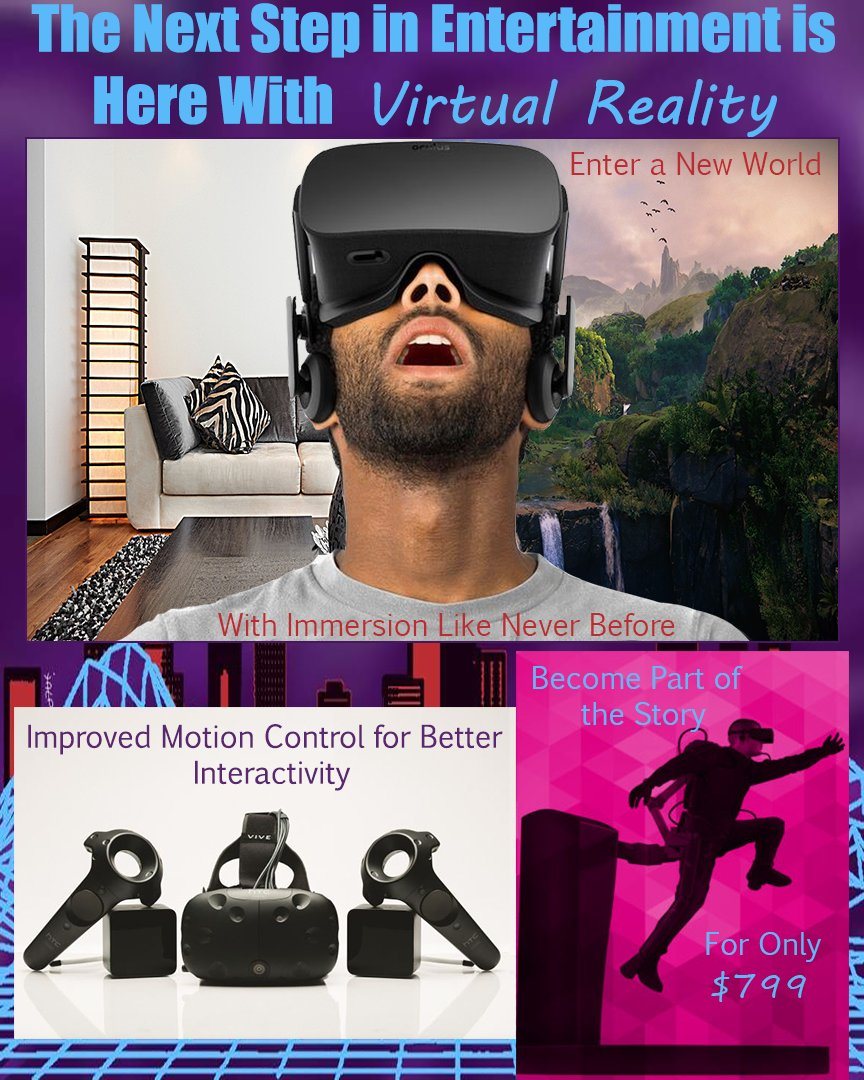
Student-made advertisement for virtual reality in stock-photo collage style
Virtual reality

Four advertisements, one argument. One group set each technology in the visual language of its moment, from the period hand-lettering and halftone of the home radio and television to the neon grid of the Power Glove and the stock-photo collage of virtual reality. Type and layout carry the period; the promise barely changes, from “The Next Step In Entertainment Technology!” in the first to “The Next Step in Entertainment is Here” in the last.

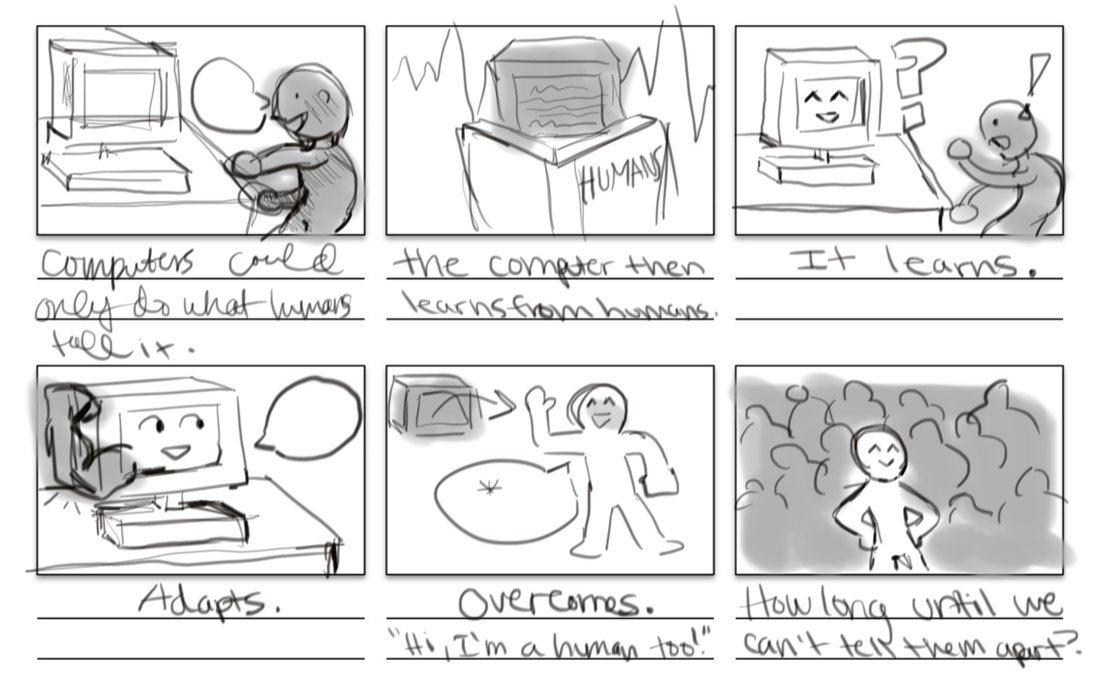
Hand-drawn storyboard for an animation about a computer that learns to pass as human
Storyboard for an animation on artificial intelligence: “Computers could only do what humans tell it … It learns … Adapts … Overcomes … ‘Hi, I’m a human too!’ … How long until we can’t tell them apart?” Other groups paired prosthetics with the transistor through McLuhan’s tetrad (enhance, reverse, retrieve, obsolesce), and another built a time capsule.

↑ Back to top