Educator

In my earliest days as an educator, when I taught middle school, I was motivated to be the teacher I’d wished I had when I was my students’ age. That motivation has slowly transformed over my career into a commitment to be the kind of teacher my students deserve.

There are good examples and bad examples, and I have learned from them both; and there have been times, too, that I have been both – and have had to commit myself to learn from my own example.

For twenty years, my practice has been motivated by a desire to empower students, to build equitable communities of inquiry, to give students an opportunity to explore their enthusiasms and passions, to listen more than I speak.

In short, my aim is to undertake the serious business of democracy in the classroom as a mechanism for helping the innovators who will build our tomorrows and our tomorrows’ tomorrows have a sense of ethics, citizenship, and all the other fundamentals required for a healthy, thriving democratic society.

Teaching approach

I have been a teacher for twenty years: in middle and high schools from 2005 to 2014, and in undergraduate classrooms since 2015. At CUNY’s New York City College of Technology, I teach diverse cohorts of students, many from backgrounds underrepresented in emerging media and with varying levels of technical ability and access. This is nothing new for me. I benefited from previous experience as both instructor and educator at the University of Texas at Dallas and, as a student in the public schools of Springfield, Massachusetts, from diverse educational environments.

I start from a premise I also argue in my research, after Raymond Williams: culture is ordinary, everyone is creative, and we are constantly generating and circulating culture. It is not the preserve of a technocratic elite or those with particular sensitivities or dispositions. As it is ordinary, it is available to anyone and everyone; and as a teacher it is my responsibility (and my pleasure) to carry that good news into every class I work with.

My pedagogy took shape in improvisational theater. Like a theatrical ensemble, learning communities thrive on trust, shared responsibility, and attentive listening. I understand my role not as a deliverer of fixed knowledge, a disseminator of content, but as a facilitator of a community of inquiry: a place where diverse perspectives are actively cultivated as resources for deeper understanding.

Keep reading

Students are already experts in one thing: the material of their own lives. So, I often begin with a lived experience or task, then introduce them to frameworks and methodologies that help them break things into discrete steps, decisions, feedback and interactions. In critique, I ask students to describe concrete decisions and actions in a matter-of-fact way, beginning with familiar operations before introducing the more specialized vocabulary they will encounter in professional settings. In all things, I favor drafts, process writing, rapid, low-fidelity prototyping, testing and iterating, sharing and comparing with other people. I invite students to share their creative interests, their artistic sensibility, their dispositions, the matter of their lives as a gateway to education; they may bring as much or as little of their lives into the classroom as they are comfortable with, but they never have to make themselves smaller or some unfamiliar shape in order to fit through our doorway.

One thing I’ve been taught by my students is the importance of keeping the tempo or pace of my students’ lives in the forefront of my mind. For so many of my students, family responsibilities take precedence over academic ones; and so, how can we build classroom communities responsive to this truth while also preparing them for a world that will be less thoughtful or responsive to their responsibilities? I believe we can balance accountability and compassion, but it must be done consciously and carefully, and not only in consideration of our students but in conversation with them. From them, I’ve learned that before introducing group work, it’s necessary to take the time to build accessible scaffolding, manageable scope, and individual accountability so that students can unlearn structures of overresponsibility or underresponsibility that have developed as a response to past experiences with well-intentioned but poorly constructed group assignments. Likewise, if I want students to be able to take the time to complete their assignments, then it’s incumbent on me to give my students a full week in advance to complete them; it becomes necessary, also, to begin the assignment within the confines of class time to give students an opportunity to discover the questions they don’t even know they’ll need to ask. Flexibility is required in other ways; while writing is a necessary skill, not every demonstration of learning must occur within that modality when voice notes, illustrations, or other reasonable accommodations will serve. Very often, when given the opportunity to discover their voice in alternative modes of expression and given the choice to select their own modality, they astound me with the depth and complexity of their insights; students who have long gone unheard quickly learn to articulate themselves elegantly, expertly, once they acquire the modalities suited to their purpose.

There are other, more global modes of accommodation that are part of my practice, such as captioning media or offering flexible formats, which benefit many students.

I assess with established frameworks such as the AAC&U VALUE rubrics, adapted to the actual course, learning goals, and student work. I am more interested in ambitious, insightful messes that preserve the ragged edge than in polished, smooth products that elide difficulties.

I have benefited from the free and generous impulse of colleagues within and outside my institution; as a consequence, whenever terms of employment permit it, I release my course materials under Creative Commons licenses and host them somewhere public and accessible.

The question of the moment is, and has been, that of LLMs and generative AI. My policy has been a work in progress, undertaken with the guidance of my peers and the feedback of my students. These days, the policy is yes, with disclosure, and with specificity: I challenge my students to document what they used, what they used it for, and why they used it. At the end of the day, the student remains responsible for their work, no matter what tools they’ve used.
↑ Back to top

Student work

Highlights from the courses I teach. Each course page has the full set, with the assignments behind them. Student names are withheld.

↑ Back to top

Courses

Design Foundations I

MTEC 1101 · New York City College of Technology, CUNY · Spring 2022 to present (earlier as Introduction to Emerging Media Practice, then Emerging Media Foundation)

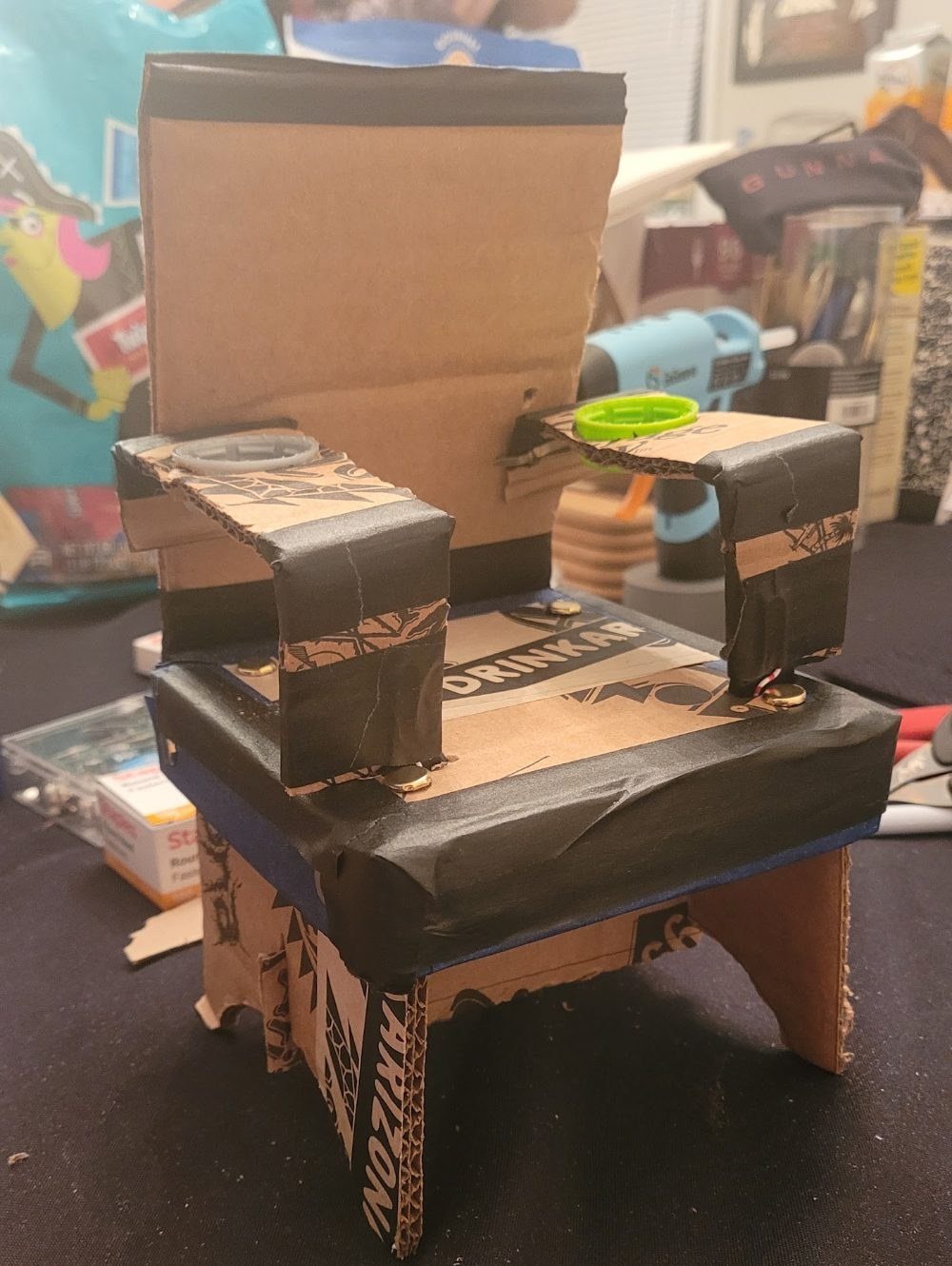
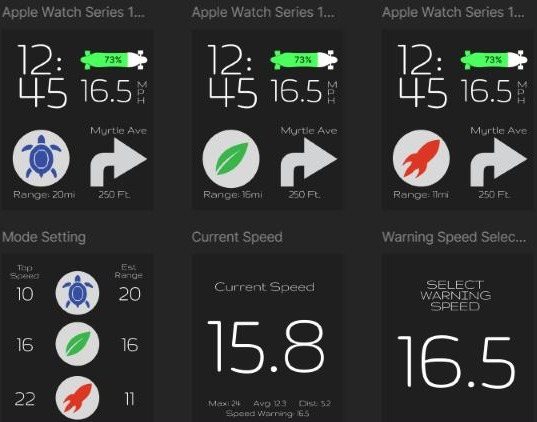
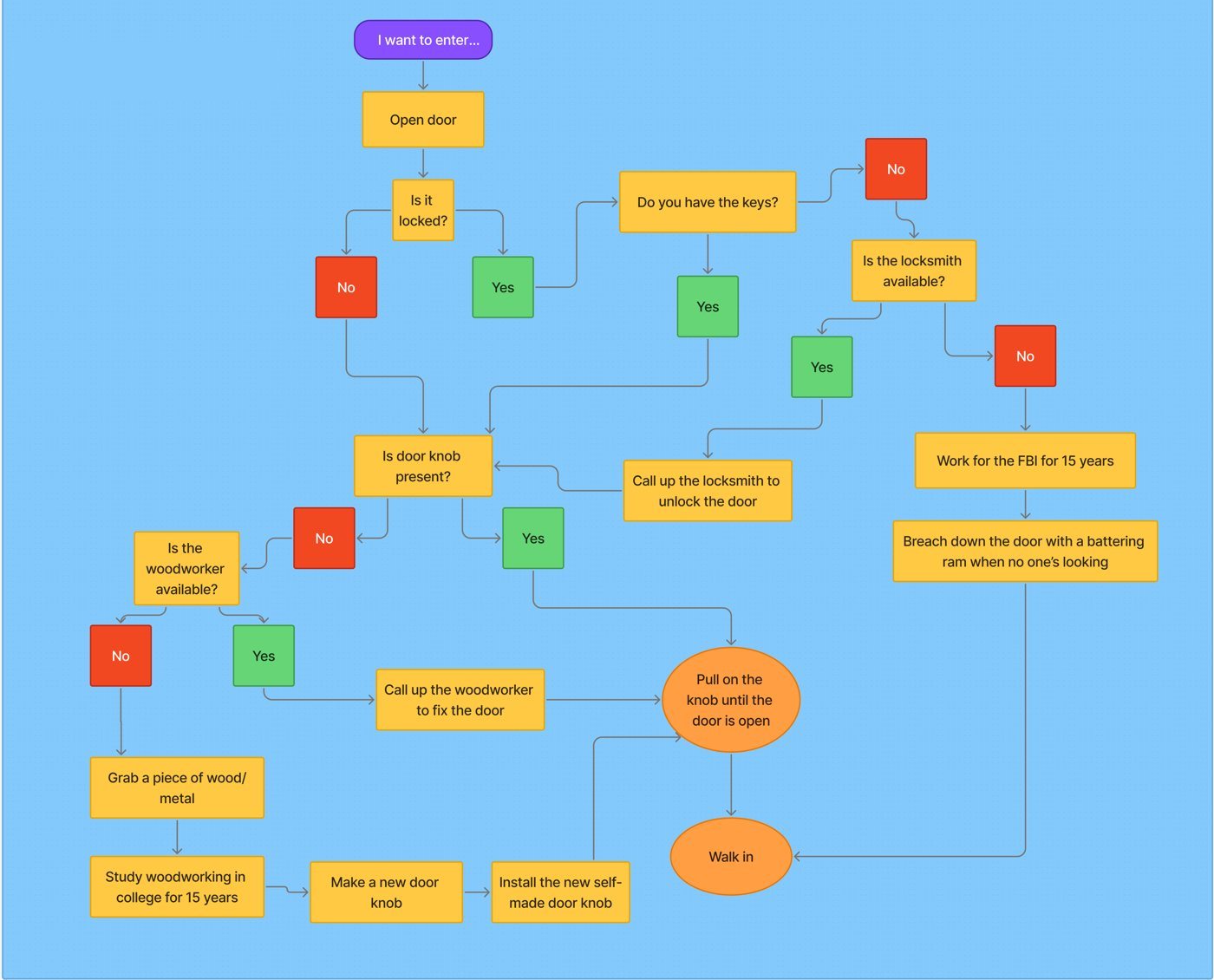
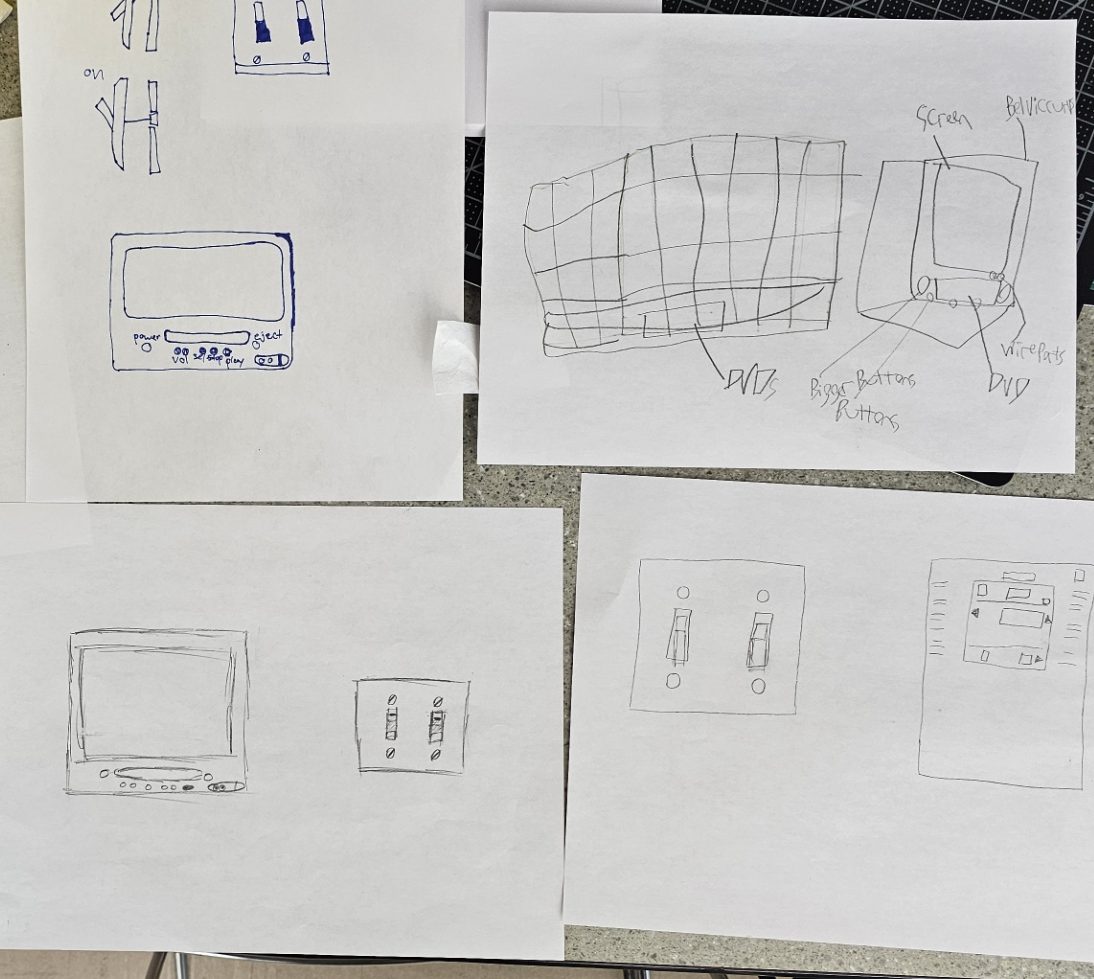
The first course in a two-part series for Emerging Media Technology majors. Through project-based learning, students explore how design integrates creativity, critical thinking, and technical skills: composition, color, visual hierarchy and typography; image and sound; an interaction design unit with partner interviews, user flows, wireframes, Figma prototypes and peer usability testing; and, in Fall 2026, a class-wide tube-television installation navigated by joystick and two buttons. With the Design Foundations II instructor, I helped develop the course framework, aimed at first-semester retention.

Physical Computing Skills Lab

MTEC 1005 · New York City College of Technology, CUNY · Fall 2022, Fall 2023, Spring 2024

A one-credit introduction to physical computing: electronics and circuit fundamentals, analog and digital voltage control, prototyping techniques, and the Arduino microcontroller. By the end, students build circuits, program the Arduino to sense and respond to the physical environment, and design and complete a prototype of an interactive physical computing interface.

Introduction to Technoculture: lecture and discussion sections

ATCM 2300 · University of Texas at Dallas · 2017 to 2019 · 300+ students a semester

A foundational lecture course designed to understand history in relation to practice and practice in relation to history, with evocative objects as the mediating influence. As Lead TA and Producer, then Graduate Teaching Associate and Lead Curriculum Coordinator, I helped design and revise the weekly lectures, produced discussion-section materials, developed assessment strategies, and mentored and scheduled rotating cohorts of teaching assistants. I led two discussion sections of 15 students each.

The lecture was taught by Anne Balsamo.

Digital Content Design, later Writing for ATEC

ATCM 3301 · University of Texas at Dallas · Fall 2019 to Summer 2021 · instructor of record

A junior-level presentation and composition course: studio-based instruction in professionalization, digital rhetoric, and public speaking. I guided upper-level students in translating creative practice and technocultural theory into visual and written presentations, as part of a coordinated instructional team with shared rubrics and collective grading. The course moved online in spring 2020; every lecture from the hybrid and online versions exists on video.

Film and video at a performing arts high school

Pioneer Valley Performing Arts Charter Public School, South Hadley, MA · 2005 to 2014

Standards-aligned humanities courses and technical electives: Introduction to Video Production, Beginning Film Critique, Topics in Advanced Film Critique (documentary, Film Noir, war), and Improvisational Theater. Units were named for Vertov’s Kino-Nedelya, Kino-Glaz and Kino-Pravda; students analyzed films closely, argued positions in writing, or made something in the form.

Earlier, as a graduate teaching assistant

The New School and Parsons School of Design · 2015 to 2016

Introduction to Visual Culture (Graduate Teaching Fellow, Parsons, Fall 2015), a competitive, application-based fellowship: led a discussion section under Dr. Margot Bouman (lecture responses, classroom culture, evaluation of student writing), and guided each of 15 to 20 students through a semester-long research project of their own, from topic and abstract to annotated bibliography, revised essay and presentation.

Introduction to Media Studies (The New School, Spring 2016), the core graduate lecture course under Dean Anne Balsamo: maintained its digital learning platforms and student communication, ran the technical side of its hybrid format (in-room instruction alongside a livestream for remote students), and designed the archive workflow for recorded sessions.

Experimental Narratives (The New School, Spring 2016): coordinated lab workflows under Dr. Christiane Paul, took part in studio critiques, guided students beyond linear, continuity-based structures toward database narrative, hypertext and interactive systems, and gave a guest lecture on Twine and interactive fiction.

Courses in development (syllabi available on request)

  • Field Methods for Digital Culture. Observation, interviews, visitor studies and documentation, applied in turn to each student’s collaboratively developed research question. Students choose a public interface (a kiosk, a sign, a screen, a phone), document how it addresses the people who use it, and compare those observations with a historical or institutional antecedent.
  • Technoculture: How Things Make Us. Everyday technologies paired with antecedents (the car and the suburb, the book and the photograph), read backwards and forwards through history, philosophy and media theory.
  • Can Machines Think? A Media Study of Nonhuman Intelligences. The idea of nonhuman intelligence dates back to well before the invention of the universal computer, and indeed, many of those early figures recur in new forms: from Galatea and the automata to the Mechanical Turk and the Wizard of Oz; from Ava of Ex Machina and the Turing Test to ELIZA and Her’s Samantha; from HAL 9000 and Deep Blue to the Star Trek Holodeck and the Chinese Room: in this course, we will take an inventory of the speculative imaginary of nonhuman intelligence.

    By better understanding how we’ve imagined nonhuman intelligence in the past, we can better come to terms with how we are presently inclined to misinterpret the technocultural phenomena of AI.

    Finally, by deeply engaging the technicity of language models, including fine-tuning an extremely small one of our own, we get in touch with the reality so often obscured or mystified by the modern developers of today’s latest version of the thinking machine.

  • A Class on Reality. All the mechanisms of reality manufacture: illusions, counterfeits, copies, simulations, simulacra, diegesis, verisimilitude, fakes and phonies. Students master the mechanisms of fabrication by doing them; they use the dark arts and show us how to defend ourselves from them.
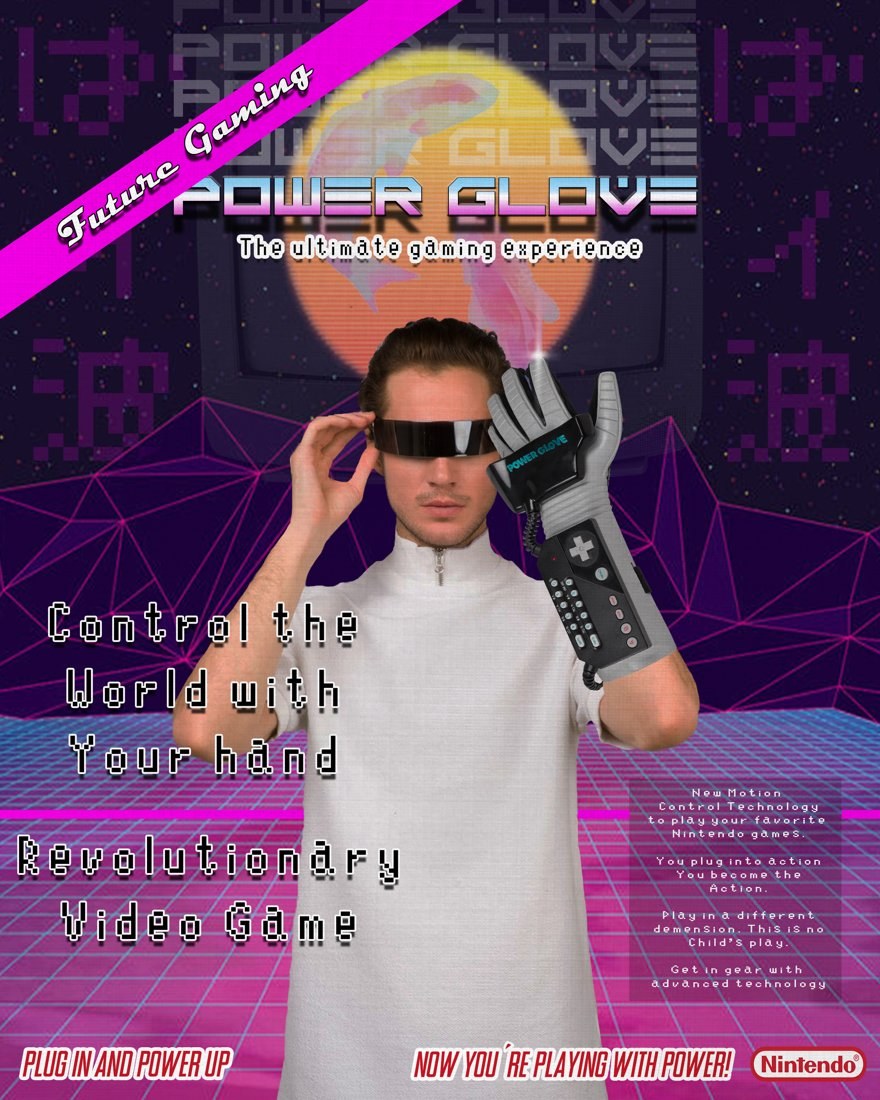
  • Vanishing Technologies: Hands-On Media Archaeology. One administrator’s e-waste is a student’s final project. Vanishing technologies and emerging technologies are put into partnership to repair, reanimate, and reimagine obsolete technological objects, residual media, and other discarded byproducts of postmodernity. For their final project, students are encouraged to explore a vanishing technocultural infrastructure, excavate it, reanimate it, and then use it in a work of speculative design that allows them to reimagine the past in order to reconstruct the future.
  • Remix, Recreativity, and the Commons. Authorship from the commonplace book to the training set: appropriation, sampling, copyright, open licenses, consent. Enclosure and the commons in the era of large language models and data analysis.
  • Technologies of Address: Signs, Screens and Phones in Public. How kiosks, signage, screens and telephones address publics, and who they leave out, with fieldwork.
  • Play, Control, and the Vanishing Game. Games as rule systems, platforms and labor, and as a way to study control.
  • Worlds We Want to Live In: Speculative Design and the Technological Imagination. Science fiction, design fiction and diegetic prototypes as ways societies rehearse technologies before they arrive.

↑ Back to top

Mentorship

The mentoring I am proudest of happened on Far-Seeing Apollo (2019), a broadcast installation that Anne Balsamo and I built with a design team of undergraduate assistants. Responsibility was not delegated but assumed, through a gradual, collective process, until it became ordinary, which is to say habitual. I am eager to mentor students who do not fit neatly into disciplinary silos. In my experience, students who are empowered will run farther and faster than any curriculum could ever drag them.

Students on research projects

On Far-Seeing Apollo, the assistants docented, interviewed visitors, tracked viewing patterns and gathered releases. A year earlier, Strange Echoes and Computer Visions (2018) was built by the Public Interactives Research Lab with student volunteers.

Teaching the teachers

For Introduction to Technoculture I supervised, mentored and scheduled rotating cohorts of graduate teaching assistants, and the textbook was written partly to help onboard future cohorts of TAs who might not have our background.

Capstone reviews

As Culmination Panel Advisor in City Tech’s Department of Entertainment Technology (Spring 2026 to present), I review the capstone technical and creative portfolios of graduating seniors: two review rounds in spring 2026 for sixteen students’ projects in progress, with written notes for each.

Portals (Worlds We Want To Live In)

Since 2025, with Bruce Terry and Dr. Leticia Ferreira of Woodbury University, I have co-organized a bi-coastal exchange in which City Tech and Woodbury students build diegetic objects, tangible artifacts from imagined futures, and show them together; the first exhibition was at MADE at Woodbury in April 2026.

Headgear

From 2006 to 2014 I was advisor and executive producer of Headgear, a student comedy writing and performance ensemble at Pioneer Valley Performing Arts: script development, rehearsal, staging, and mentoring student directors and producers.

↑ Back to top


Physical Computing Skills Lab
(Fall 2022, Fall 2023, Spring 2024)

New York City College of Technology
Entertainment Technology Department (Emerging Technology Program)
Brooklyn, NY

Syllabus: MTEC1005 - GitHub - Physical Computing Skills Lab (Spring 2024)

This one-credit course introduces students to the field of Physical Computing while building foundational skills for courses in the Physical Computing concentration. We will focus on electronics and circuit fundamentals, analog vs digital voltage control, prototyping techniques, and a basic introduction to the Arduino microcontroller.

The goals of this course are to give students an introduction to the physical computing prototyping process, basic principles of electronics, building circuits, programming, working with sensors, actuators and control interfaces, and breaking down a prototyping process into manageable goals and tasks.

By the end of this course, students were able to create basic electronic circuits and identify components, program the Arduino microcontroller to sense and respond to the physical environment, work with digital & analog inputs + outputs, sensors & actuators, and design and complete a prototype of an interactive physical computing interface.