It’s For You
Bespoke telephonic infrastructure for short-distance phone calls.

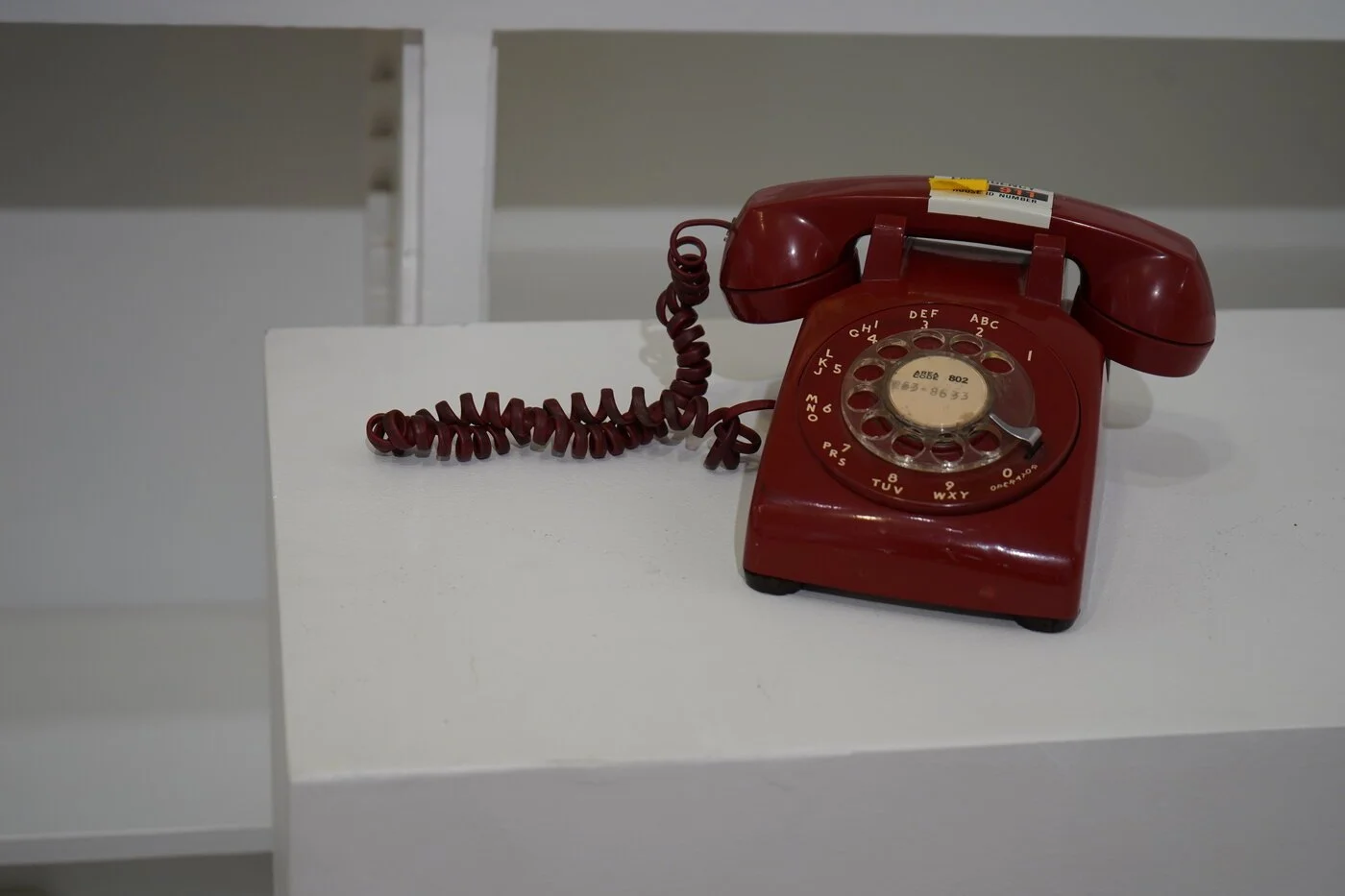
Ericsson Rotary Phone, ATEC Lobby, Halloween 2017.
What it is
The project began with an intuition that the pay telephone, disappearing as a communication infrastructure, is simultaneously emergent as a poetic object whose cultural and affective possibilities could be explored by stationing it in a public space, as a variety of public interactives. The initial vision was of two telephones in public space within line of sight and outside the sphere of audible speech from one another.
What was built, how it works
Combining a rotary telephone through contemporary VOIP infrastructure and a custom microcontroller setup gave the barest expression of life to a dead object: dial tone, ring, and the capacity to call and be called.
Discoveries
My first and most alarming discovery: no one wanted to pick up a telephone ringing in a public place. I had thought that a ringing telephone inherently addresses a public, but whether placing the prototype on a desk or a white gallery plinth, it practically guaranteed that passersby would not answer it; the public often required an explicit, performative expression of permission.
In other words, they had to be told “it's for you!”
This was the beginning of a long and productive strain of research.
Technicolor Experience, Plano Art Fest, 2018.
Materials
Western Electric Model 500 (rotary) and Model 2500 (touchtone) telephones; ObiHai 100 phone adapter; Raspberry Pi; push button; Google Voice and Twilio
Shown
ATEC lobby, UT Dallas, October 31, 2017;
Technicolor Experience, Plano Art Fest, 2018
Further projects incorporating this research
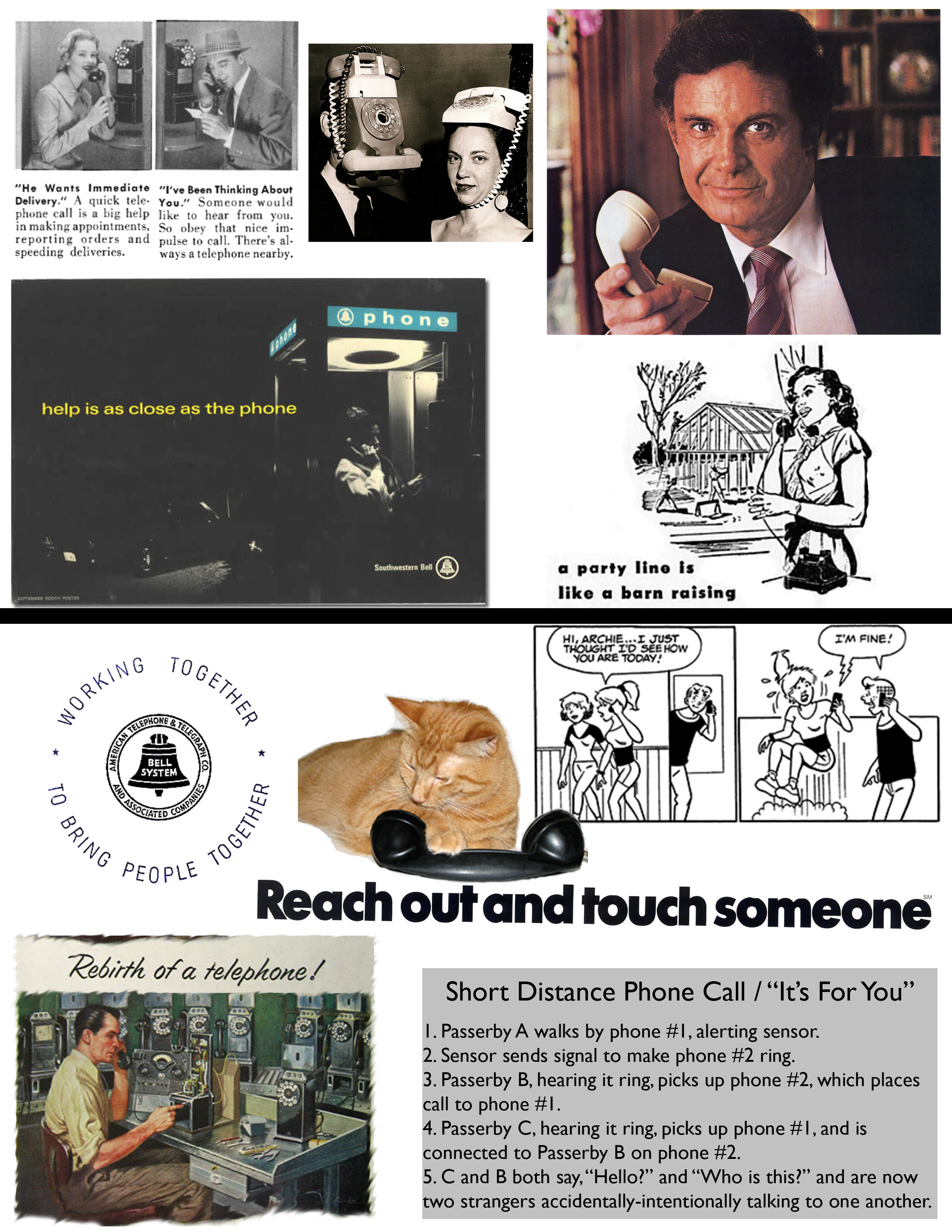
Reach Out and Touch Someone, Plano Art Fest, 2018: geotagged tweets triggered the call.
Telephone station in Strange Echoes and Computer Visions, ATEC, UT Dallas, 2018.
One Breath Phone: Messages for a Revolution, with LabSynthE, Ammerman Center Biennial Symposium, Connecticut College, 2022.